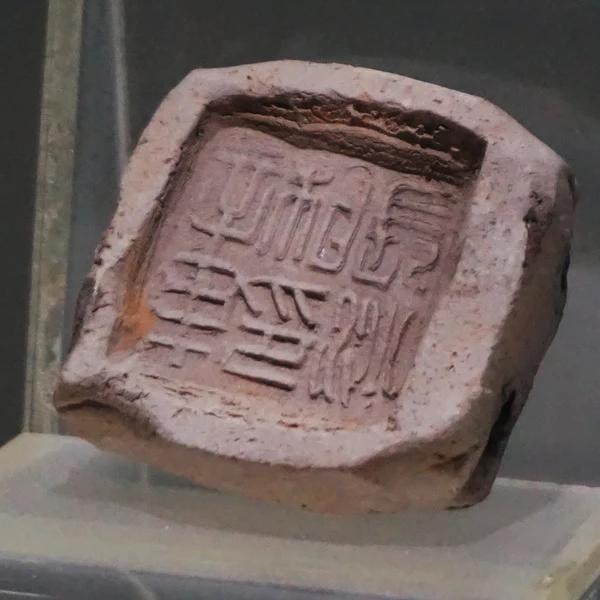
Императорская глина эпохи Цинь-Хань и сургучные письма династии Цин
Before paper, Chinese documents were inscribed on bamboo slips, tied with cords, and sealed over the knot with refined clay stamped with bronze or jade seals—known as "Fengni." In the Ming and Qing Dynasties, Western shellac sealing wax was adopted by the Forbidden City Grand Council to seal confidential memorial boxes ("Zouzhe") and urgent imperial dispatches.
Надпись и легенда печати
“秦代“皇帝信玺”、“丞相之印”、“火急封发””
Перевод и толкование: 东方封缄金石防伪与帝王密折制度的千年流变
Historical Origin & Genesis
During the Qin and Han Dynasties, written edicts were recorded on bamboo slips bound into scrolls. To protect state secrets across postal couriers, officials utilized the "Dou Jian Feng" method: a wooden cover-block (jian) with a carved recess was placed over the bundle knot, filled with refined clay, and stamped with official bronze seals.
Once dry, the "Fengni" formed an unalterable security block. As stated in Han texts, official trust in civil decrees rested upon the unviolated clay seal.
In the Ming and Qing Dynasties, European shellac sealing wax entered the court via maritime trade. Under Kangxi and Yongzheng, the secret memorial system ("Zouzhe") placed classified memorials inside locked leather dispatch boxes sealed with molten sealing wax, echoing Western security protocols.
Matrix Craftsmanship & Material Structure
Refined Silt Preparation: Clay for Fengni was repeatedly sifted and elutriated to remove coarse sand, tempered with trace animal oils for maximum malleability. Excavated examples display dense purple-clay or charcoal-grey vitrification.
Intaglio-to-Relief Conversion: Classical Qin and Han seals were cut in intaglio (white characters); when pressed into wet clay, the impression popped into bold relief surrounded by organic clay lips.
Qing Imperial Laboratory Records: Imperial household accounts record the specialized compounding of imported shellac with fine cinnabar vermilion for Grand Council secret dispatches.
Iconography, Heraldry & Epigraphy
Epigraphic Majesty of Qin Small Seal and Han Clerical Script: Fengni clay impressions capture the golden age of Chinese seal-carving—balanced, architectural, and austere.
Ribbon and Knob Hierarchy: Official bronze and jade seals featured tortoise, camel, or loop knobs tied with color-coded silk sashes designating civil and military rank.
Qing Memorial Typography: Imperial wax seals incorporated traditional Chinese fret patterns (Huiwen) and auspicious motifs alongside calligraphic characters like "Secret Dispatch".
Provenance, Conservation & Archival History
With the widespread adoption of paper in the Wei-Jin era, bamboo slips and sealing clay were superseded by red ink-paste stamping. Ancient clay impressions remained buried for over a millennium.
During the 19th-century Qing Dynasty, massive archaeological discoveries of Qin and Han sealing clays sparked an academic renaissance among master epigraphers like Chen Jieqi and Wang Guowei.
Today, the Palace Museum in Beijing and Shanghai Museum preserve thousands of historic clay impressions and Qing Dynasty imperial wax-sealed memorials.
Collectible Significance & Appraisal Analysis
The Fossils of Ancient Seal Art: Because bronze official seals were routinely melted upon an emperor’s demise or regime change, discarded clay impressions provide the only surviving impressions of lost masterpieces.
Connoisseurship and Appraisal Checklist:
1. Ceramic Vitrification and Earth Patina: Genuine 2000-year-old clay impressions are rock-hard, displaying mineralized burial patina without raw mud scent;
2. Cord Impressions on Reverse: The reverse side must display the cross-hatched impressions of ancient linen cords and the grain of the wooden slip block;
3. Historical Orthography: Legends must conform rigorously to documented Qin and Han bureaucratic nomenclature and epigraphic orthography.
Вдохновлено историей: создайте персональную сургучную печать в 3D
Воплотите вневременную эстетику классической сфрагистики. Смоделируйте собственную печать в веб-студии с физическим рендерингом WebGL: отталкивайтесь от исторических палитр, настраивайте рельеф и экспортируйте в 3D GLB.