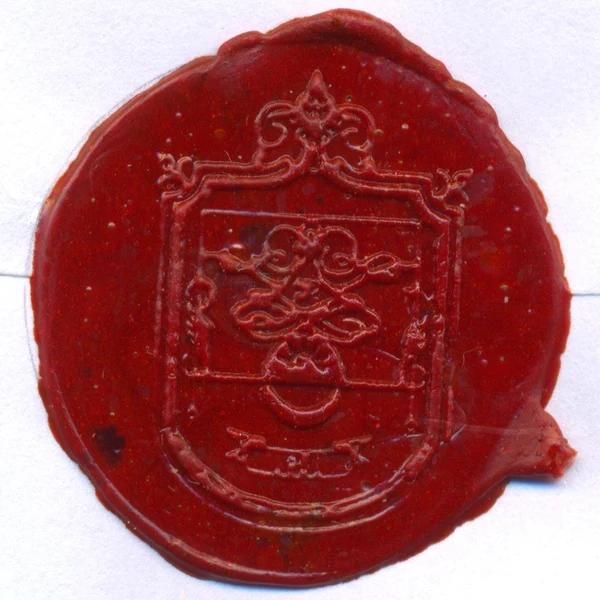
Кольцо Рыбака и папские бреве с красным сургучом
The Fisherman’s Ring is the supreme signet worn by the Pope as Successor of Saint Peter. From the 15th century, papal briefs were officially authenticated by impressing this signet into red sealing wax Sub Annulo Piscatoris. Upon a pope’s death, the ring was ceremonially smashed with a silver hammer, rendering every historic wax impression an irreproducible relic.
Надпись и легенда печати
“结语程式:SUB ANNULO PISCATORIS(在渔夫权戒印鉴下)”
Перевод и толкование: 在渔夫权戒封印之下,并刻有在任教皇尊号拉丁文缩写
Historical Origin & Genesis
The earliest recorded mention of the Fisherman’s Ring dates to 1265 in a letter from Pope Clement IV, stating that the correspondence was authenticated not under the heavy lead bulla, but "under the seal of the Fisherman."
Within the Apostolic Chancery, formal Bulls utilized pendant lead seals, while routine papal briefs (Brevia Apostolica) addressing diplomatic and administrative matters were sealed directly on paper with the Fisherman’s signet in red wax.
The imagery evokes Christ’s words to Peter: "From now on you will catch men" (Luke 5:10), depicting the fisherman apostle pulling nets from his boat.
Matrix Craftsmanship & Material Structure
Solid Gold Craftsmanship: Each newly elected pontiff receives a freshly cast solid gold Fisherman’s Ring at his inaugural Mass, engraved with his Latin regnal name encircling Saint Peter casting his nets.
Apostolic Vermilion Wax: The Vatican chancery maintained a strictly guarded formula of shellac and cinnabar, creating a resonant shade historically celebrated as Pontifical Scarlet.
Direct Imprint on Vellum: Unlike pendent royal seals, papal briefs folded the parchment and applied hot wax directly over the seam, impressed by the ring to secure absolute confidentiality.
Iconography, Heraldry & Epigraphy
Theological Symbolism: Saint Peter pulls his net from a double-ended boat across the Sea of Galilee, symbolizing the Church as the Bark of Peter gathering souls.
The Scriptural Epigraph: The concluding formula "Datum... sub annulo Piscatoris" sealed the sovereign juridical validity of the pontifical brief.
The Ritual of Destruction: Upon the death of a pope, the Camerlengo (Cardinal Chamberlain) ceremonially defaces or shatters the ring with a silver hammer in the presence of the College of Cardinals, preventing post-mortem forgery.
Provenance, Conservation & Archival History
The Vatican Apostolic Archives houses thousands of historic briefs bearing pristine wax impressions from the Renaissance to the Victorian era.
In 1842, Pope Gregory XVI modernized chancery procedures, retiring manual wax ring impressions in favor of red ink stamps, concluding nearly six centuries of molten sealing wax tradition.
Archival briefs bearing intact impressions of famed Renaissance popes (such as Leo X and Clement VII of the Medici) are among the most revered treasures in European state archives.
Collectible Significance & Appraisal Analysis
Irreplaceable Sovereign Relic: Because each pontiff’s ring was intentionally destroyed upon his passing, posthumous impressions from the original matrix are physically impossible. Each seal is an unrepeatable historical timestamp.
Connoisseurship Guidelines:
1. Intaglio Mastery: Authentic impressions display refined sculptural handling of the apostle’s hands and net weave, characteristic of Rome’s master goldsmiths;
2. Chancery Hand Verification: Briefs were penned in humanistic chancery italic script and signed by the Secretary of Briefs;
3. Shellac Oxidation and Crazing: Centuries of dry archival storage yield microscopic crazing and deepened peripheral amber tones across the pontifical red wax.
Вдохновлено историей: создайте персональную сургучную печать в 3D
Воплотите вневременную эстетику классической сфрагистики. Смоделируйте собственную печать в веб-студии с физическим рендерингом WebGL: отталкивайтесь от исторических палитр, настраивайте рельеф и экспортируйте в 3D GLB.